
Report on the talk by Harry Soutar – Thursday 26th March 2026
Our roving reporter John Aldersley has provided a report on the March lecture given by our council member and young engineer…
Lecture: ‘Project ORION The Mars Rover’
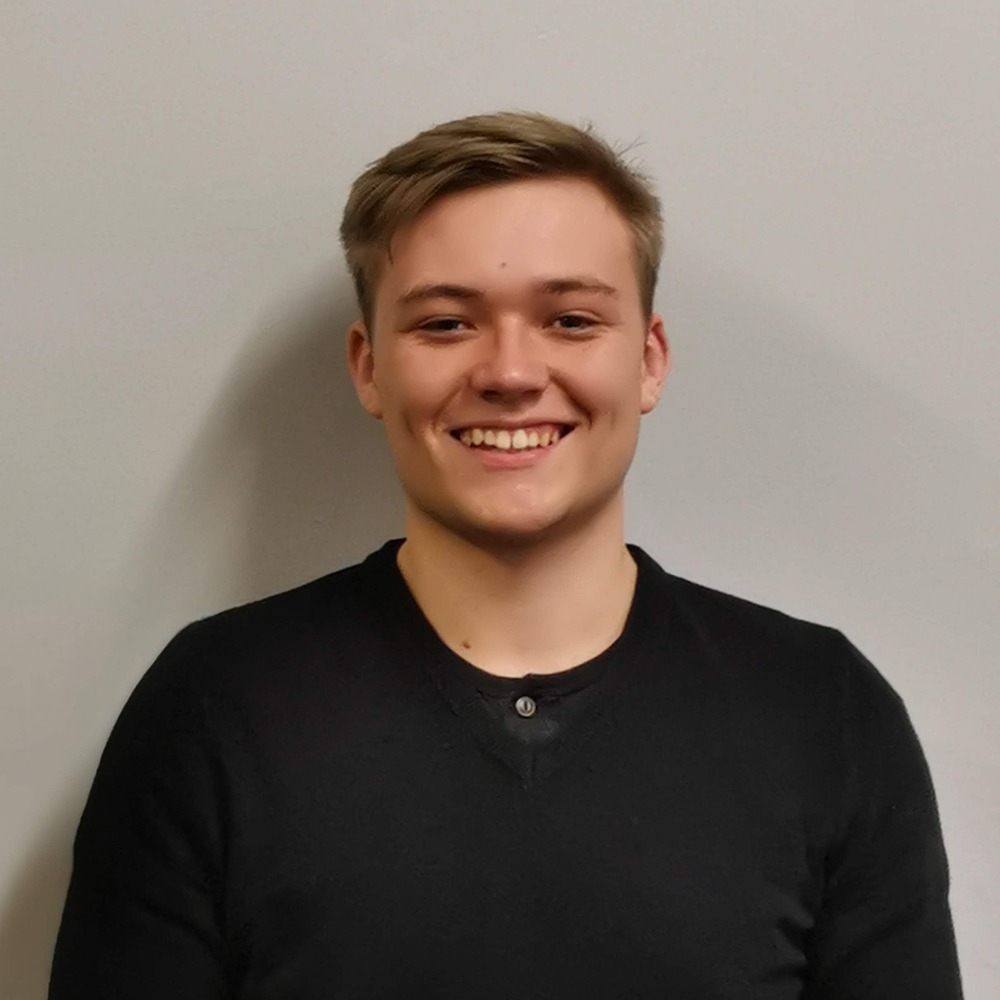
John forwarded the following:-
“Here is my report on the talk that Harry gave on Thursday 26th March 2026 at the Morley Methodist church hall. This was the last time we will be using the church hall. We have another venue lined up, more of that later. I extend many thanks to Ian Scholes for opening up the hall, even though he wasn’t feeling well. I have personally thanked Ian for all his help and we all wish him luck with his on-going treatment.
We had a good attendance, so thank you to all the members who attended. Harry started late as there was a road closed in the centre of Leeds, causing havoc.
Harry gave us the run-down of the projects. Yes, there are three things going off starting with a small rover (the size of a microwave) that needed to take soil samples. Harry said there had been an initial design that had, at a late stage been binned, as the digging bucket could not be parked and some of the components were open to the dusty environment.
A new design was drawn up in the pub after a few pints of proper beer ! I was pleased to see Harry had his student prize Mitutoyo Verniers (aka ‘very nears’ !) to hand during the redesign. We saw some of the team who are running the projects and it was pleasing to see so many young engineers taking part in their spare time, bearing in mind a lot of them are in the final years of their degrees.
The second item was a larger rover that had a weight limit of 40kg and is required to bore as opposed to take samples from the surface. The last item was to retrieve satellites that are floating about up in space. Harry told us of the various docking devices that are used, depending on who had made them. The amount of dud equipment up in space is an issue, similar to the amount of rubbish on Mount Everest.
It was clear that funding was the main issue for all the projects. The association had contributed £500 and the University of Leeds had matched that. One of our corporate members, WDS Components, are supplying equipment free so many thanks to our vice-president Sam Wilkinson and to Mark Moody, one of the directors at WDS, for their forward thinking in supporting the projects.
Harry is actively looking for sponsors, as it is a tremendous effort to beg, steal and borrow raw materials, which comprise mainly of Aluminium and plastics (used on the 3D printers).
All of the projects are subject to testing on a vibratory bench to simulate the parts being sent up into space aboard a rocket. Airbus are hosting a presentation event in the UK and Harry is hoping to present the smaller rover in July. This will be along with other universities taking part. There is only one winner and chances are slim, but let’s be fair, some budgets are far larger than others. The mention of some others using carbon fibre have a massive advantage.
What I learned were that the groups running the three projects were fully focused, with so many things being learned on the way. For instance, the dust created by the wheels on the rovers could prevent the solar panel from working, thus stranding the rover. With limited funding the projects will only be ideas that would need massive funding to go further beyond the design stages. The operating software, cameras, telemetric devices and motors I found interesting.
Harry and colleagues had been to schools with robot rover models to show children under the STEM banner (Science Technology Engineering and Maths). Harry reported that young minds are really interested in what they are being shown.
We heard about (sorry if you are a member of the flat earth society) that academics are looking at what is required to live on the Moon and on Mars. Could things be grown as the landscape is barren and what buildings could be constructed. My own take on all this is back in 1934 when the first ‘Flash Gordon’ comic was launched many thought it was just fiction, but I believe all this work done by Harry and his team will in time be real.
We ended the talk with questions. Graham, our president, summed up the talk by saying it was pleasing to see free thinking from young engineers is being used, with what some may think is a bit wild on the ideas front. Graham said free thinking is important, as when the students find work they may not be able to have that freedom.
We all felt that Harry gave an excellent talk and it was very informative. We pondered that Harry is far younger than most of the members of the association and wondered would our older members have the attributes to deliver a talk in font of senior more experienced engineers. I will leave that with you to ponder…..”
J. Aldersley – March 2026
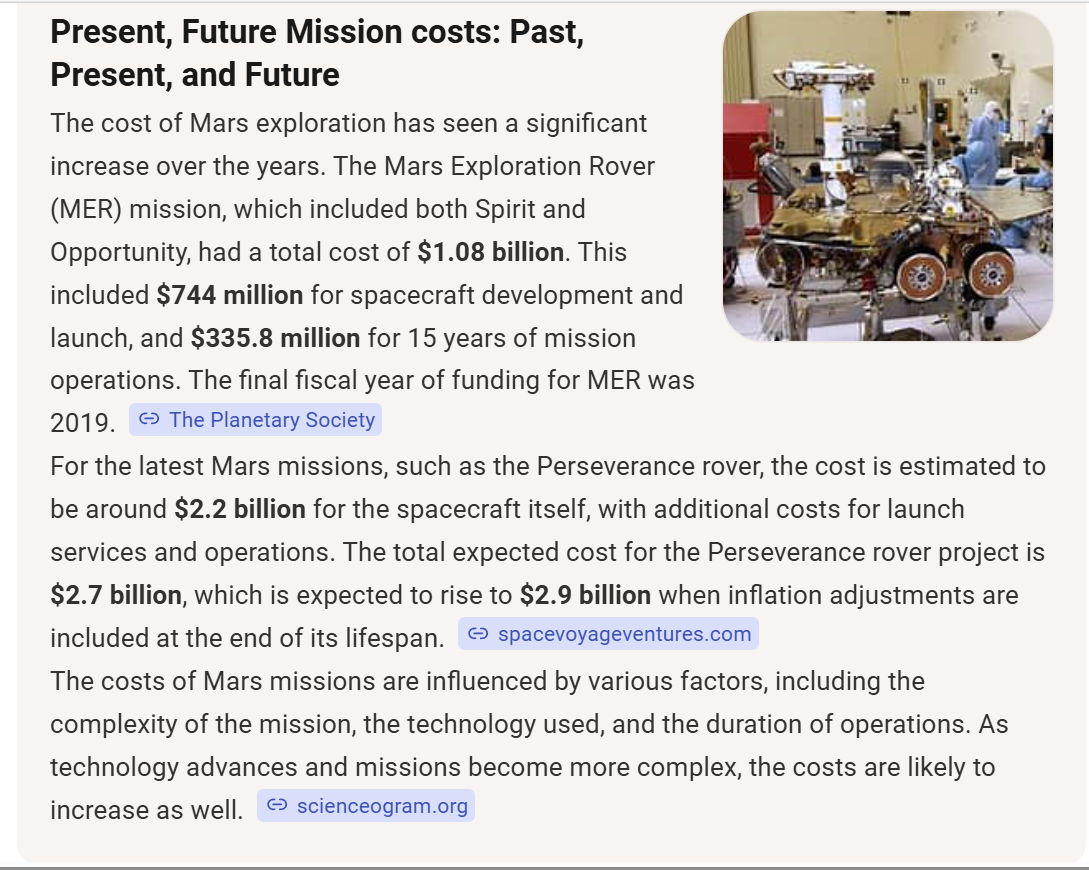
For those who are wondering how much would be needed to design a rover, here is an AI answer to that question :-
x